
 US
US




About Capital One statements
Capital One is best known for credit cards but its 360 checking and savings accounts produce normal monthly PDF statements too. For a high-street account like this, the statement is a normal monthly PDF you pull from the website or the app, under Statements.
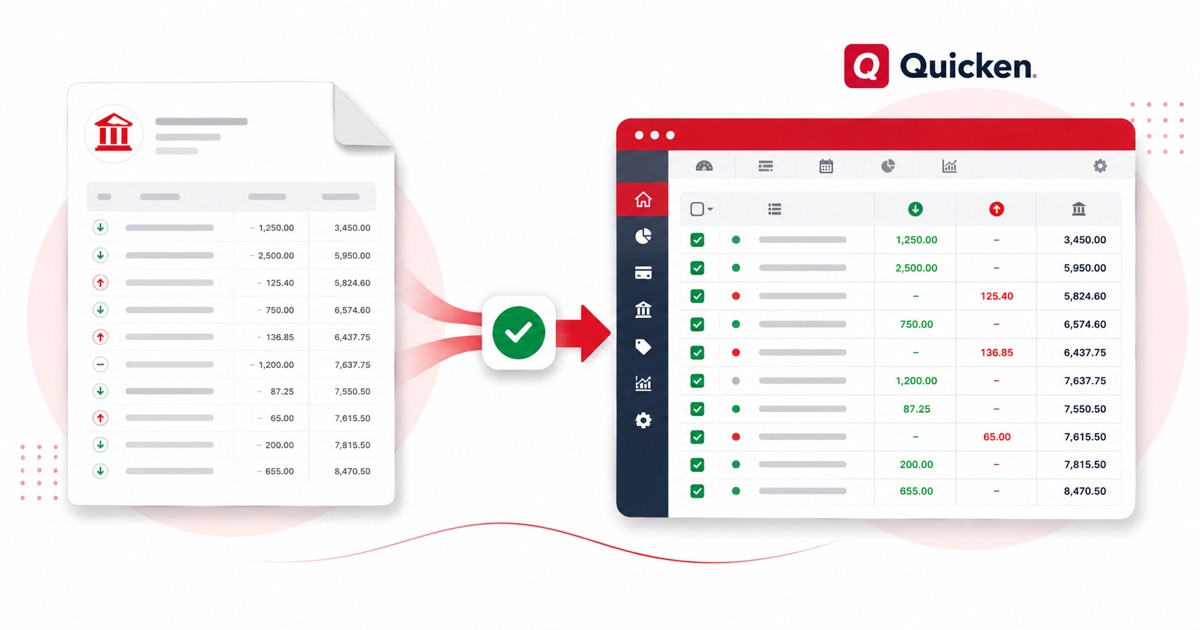
The part a copy-paste can't handle is the layout. Capital One 360 statements run as one continuous list, with debits and credits told apart by a sign in the amount column. The converter reads all of that into its own columns instead of losing it.
Amounts stay in USD (US dollars) and dates keep the MM/DD/YYYY order — no quiet day/month swaps on the way out. If your only copy is a scan or a phone photo, that's fine — OCR handles it, and the totals still get reconciled.
Once it's in Quicken, you reconcile the lines like any other import — the conversion just saves you the typing.
Why people convert Capital One to Quicken
Quicken can only download so far back, and a Capital One connection might not cover an old account or a closed one at all. Converting the statement PDF to OFX lets you load those transactions in by hand, with a unique id per line so a re-import won't double anything.
The common case is a bookkeeper handed a folder of Capital One PDFs and told to "get these into Quicken." Converting each one is far quicker than retyping, and the balance check means you trust the totals before they land in the books.
Import a Capital One statement into Quicken
Quicken reads OFX (preferred) or QIF.
- Convert the PDF above and download OFX (preferred) or QIF.
- In Quicken: File → Import → Web Connect File for OFX, or File → Import → QIF File for QIF.
- Choose the account to import into.
- Review the register and accept the new transactions.
The totals are checked first
The converter checks the maths before handing you the file — so if a transaction dropped out of the PDF, you know about it now, not when the Quicken balance is off.
Frequently asked questions
Will it import into Quicken?expand_more
Yes — download OFX (best) or QIF and import it under File → Import. OFX carries a unique id per line, so re-importing the same file won't create duplicates.
What's on a Capital One statement?expand_more
Capital One 360 statements run as one continuous list, with debits and credits told apart by a sign in the amount column. The converter reads each of those into its own column, so the OFX file imports into Quicken cleanly.
Where do I download the Capital One statement?expand_more
From the website or the app, under Statements. Save the PDF, then drop it into the converter above — multi-page and multi-month statements are read in one go.
Can I use a photo of my Capital One statement?expand_more
Yes. Scanned or photographed PDFs are read with OCR into the same columns, and the balance check still runs, so a scan converts the same as a digital download.
What does it cost to start?expand_more
Converting is free to start. Excel, CSV and JSON download with no login; the Quicken file needs a free sign-in.