
 IN
IN




About HDFC statements
HDFC Bank is India's largest private-sector bank, and its e-statement arrives as a password-protected PDF. The file you want is the official statement PDF from HDFC NetBanking, where the e-statement downloads as a password-protected PDF, not a printed mini-statement or a transaction search.
An HDFC statement is dominated by UPI entries — long payee-and-reference strings — with a Chq/Ref No column, and it arrives password-protected. That's exactly the detail that gets scrambled when you paste a PDF into a spreadsheet, and exactly what the converter preserves, column by column.
The figures keep their INR (rupees) values and the DD/MM/YYYY date order. You'll enter the PDF password once, in the browser, and then it converts like any other statement. A photo or scan of the statement converts as well: OCR lifts the figures into columns and the totals are reconciled before download.
Once it's in Zoho Books, you reconcile the lines like any other import — the conversion just saves you the typing.
Why people convert HDFC to Zoho Books
If you're reconciling a client's HDFC account in Zoho Books, you'll hit months with no live feed. A converted CSV imports straight into Banking → Import Statement, so the gaps fill in without retyping.
It's handy mid-year too, not just at catch-up. A one-off HDFC account, a statement the feed skipped, or a closed account you still need on file — convert the PDF and it goes into Zoho Books like any other import.
Import a HDFC statement into Zoho Books
Zoho Books imports a CSV — there's no separate Zoho file, so you use the clean CSV.
- Convert the PDF above and download the CSV.
- In Zoho Books: Banking → pick the account → Import Statement.
- Upload the CSV and map Date / Description / Amount.
- Import, then categorise the lines.
The totals are checked first
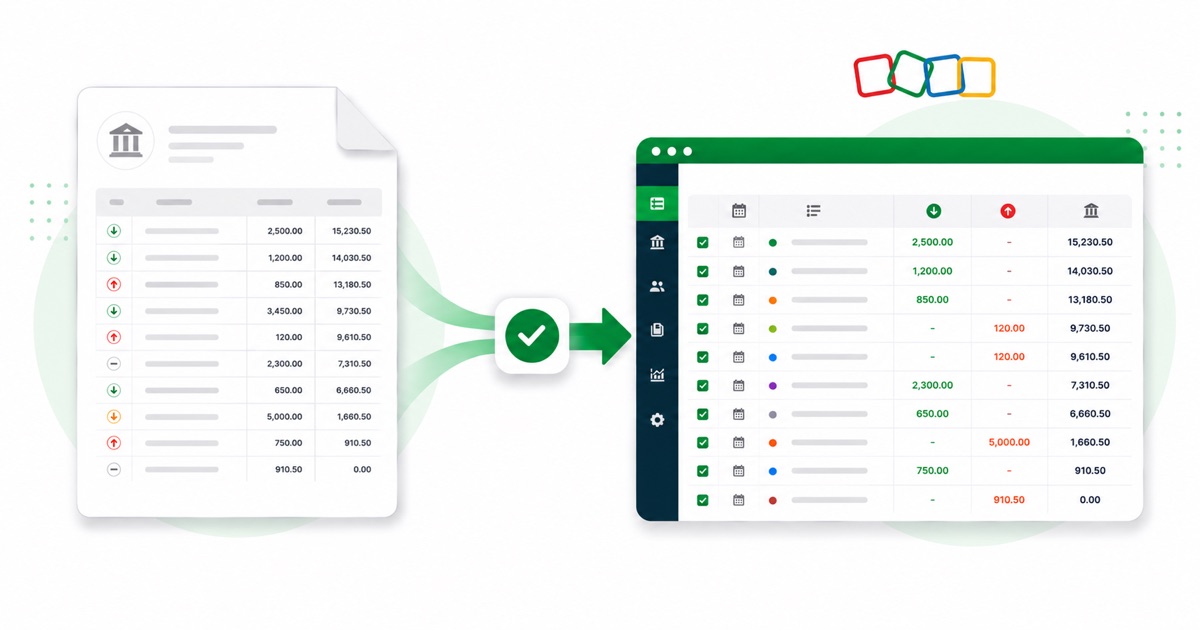
Before the Zoho-ready CSV downloads, the running balance is checked end to end. A missing or doubled line is caught at this step, not after it's already in Zoho Books.
Frequently asked questions
How does the HDFC statement go into Zoho Books?expand_more
No special file — Zoho Books imports a plain CSV, so you use the clean CSV from here. Go to Banking → your account → Import Statement, then map Date, Description and Amount. There's a preview before it commits, so you can check the columns matched before the lines post.
How is a HDFC statement laid out?expand_more
An HDFC statement is dominated by UPI entries — long payee-and-reference strings — with a Chq/Ref No column, and it arrives password-protected. The converter reads each of those into its own column, so the Zoho-ready CSV imports into Zoho Books cleanly.
How many months can I convert at once?expand_more
Whatever you download in one PDF from HDFC NetBanking, where the e-statement downloads as a password-protected PDF. A multi-month e-statement converts in a single pass, and the balance is checked across the whole file.
My HDFC PDF is password-protected — does that work?expand_more
Yes. You enter the password once and it's opened in your browser — the file isn't uploaded anywhere to be opened. After that it converts like any other statement.
Do I need to pay or sign in?expand_more
Yes — the CSV downloads with no login and no charge to start.